
Your Old Coin Could Be Valuable!
Identify It & Know Its Real Value — Free Download


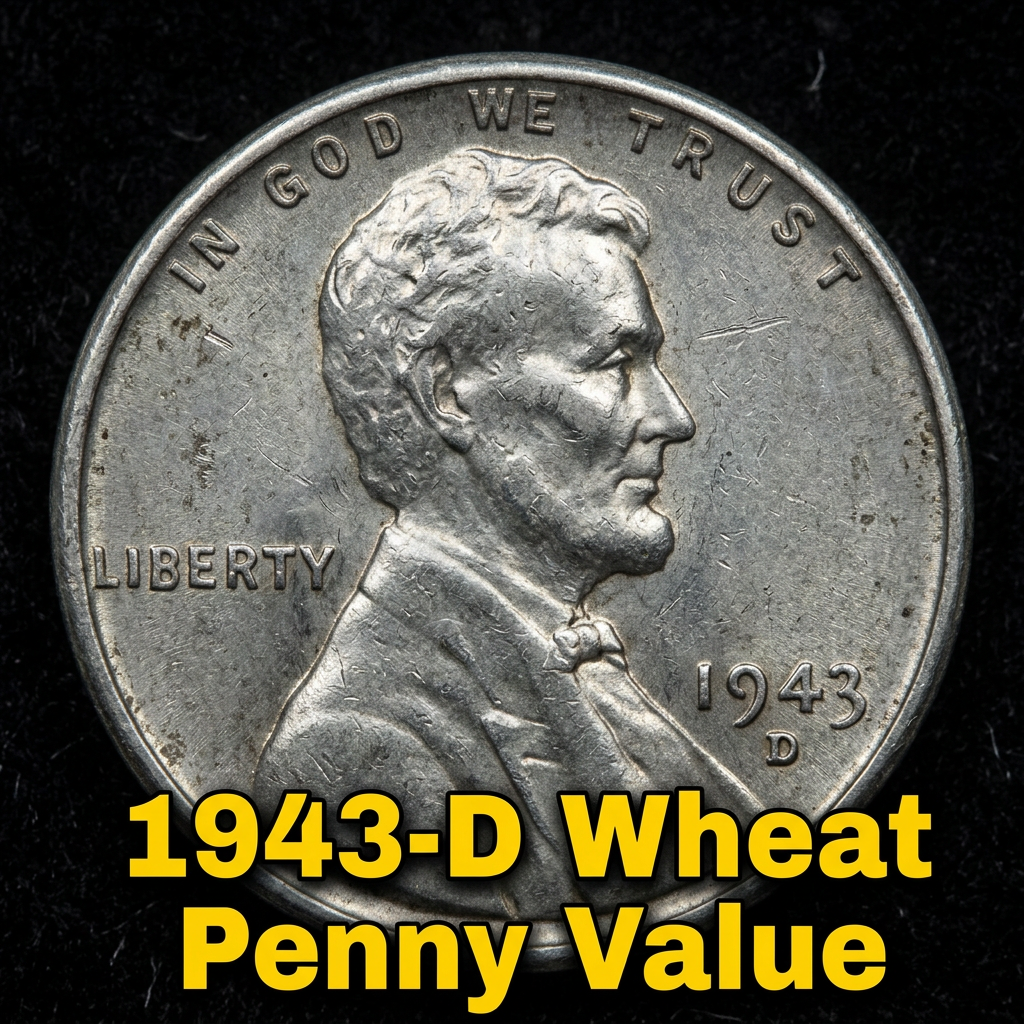
The 1943-D Wheat Penny is worth anywhere from $0.15 in worn condition to over $50 in high-grade mint state. Most Americans who find this unique steel-colored coin are surprised to learn that while it looks like silver, it is actually a piece of World War II history made from zinc-coated steel.
The History and Unique Composition of the 1943-D Steel Penny
In 1943, the United States was deep in the throes of World War II. Copper was a critical strategic metal needed for shell casings and communications wiring. To support the war effort, the U.S. Mint famously switched the composition of the penny from copper to zinc-coated steel for a single year. The Denver Mint, indicated by the “D” mint mark under the date, produced over 154 million of these coins, making them quite common even eight decades later.
Because these coins are made of steel, they are magnetic. This is the quickest way to tell if you have a genuine 1943 penny. If you are unsure about the variety or condition of a coin you found in a drawer, using a top coin identifier app can help you distinguish between the different mint marks and states of preservation. Many people find that using the CoinKnow app simplifies this process by providing instant identification through a simple photo.
Your Old Coin Could Be Valuable!
Identify It & Know Its Real Value — Free Download
The steel composition had its drawbacks. Once the zinc coating wore off, the underlying steel would rust, giving many 1943-D pennies a dark, corroded appearance. Finding one in its original, bright “silvery” luster is a treat for any collector and significantly boosts the value.
Your Old Coin Could Be Valuable!
Identify It & Know Its Real Value — Free Download
Determining the 1943-D Wheat Penny Value and Condition
The value of your 1943-D penny depends heavily on its grade. While circulated examples are common, “uncirculated” coins that look like they just came from the mint fetch much higher prices. Collectors look for the absence of scratches and the presence of original mint luster. If you want to see detailed breakdowns of market trends, checking the latest 1943-D Wheat Penny price data is a great way to stay informed.
Most coins found in pocket change or old jars are considered “Circulated.” These typically retail for between 15 and 50 cents. However, if the coin has a Sharp strike and no rust, it enters the “About Uncirculated” or “Mint State” categories. High-grade specimens certified by professional grading services like PCGS or NGC can sell for hundreds or even thousands of dollars if they are virtually flawless.
Your Old Coin Could Be Valuable!
Identify It & Know Its Real Value — Free Download
For everyday users, identifying these subtle differences in grade can be difficult. Tools like CoinKnow allow you to compare your coin against high-resolution images of various grades, helping you decide if your penny is worth the cost of professional grading.
| Condition / Grade | Estimated Value (USD) |
|---|---|
| Average Circulated (Good to Fine) | $0.15 – $0.35 |
| Extremely Fine (XF45) | $0.75 – $1.50 |
| Uncirculated (MS63) | $5.00 – $12.00 |
| Gem Uncirculated (MS67+) | $150.00 – $800.00+ |
Rare Errors and the Holy Grail 1943 Bronze Penny
While the standard steel penny is common, there are legendary errors associated with the 1943 Denver minting process. The most famous is the 1943 copper penny. By mistake, a few copper blanks (planchets) from 1942 remained in the hoppers and were struck with the 1943 date. Only one 1943-D copper penny is known to exist, and it sold for over $1.7 million at auction.
Your Old Coin Could Be Valuable!
Identify It & Know Its Real Value — Free Download
Beyond the copper error, there are “re-punched mint marks” (RPM). This occurs when the “D” was stamped into the die more than once, creating a slight doubling effect. These varieties are highly sought after by specialists. If you believe you have found an error, you can check more 1943 steel penny value information to see how these specific varieties impact the sale price.
Because these errors are so valuable, counterfeits are extremely common. Fraudsters often take a 1948 penny and shave the side of the “8” to look like a “3,” or they copper-plate a steel penny. This is where the CoinKnow app’s database becomes invaluable, as it helps you recognize the specific visual markers of authentic 1943 coinage versus altered fakes.
Why Collectors Treasure the Denver Mint Mark
The Denver Mint was known for producing high-quality strikes during the 1940s. The 1943-D Wheat Penny often shows better detail in the wheat ears on the reverse and Lincoln’s hair on the obverse compared to the Philadelphia (no mint mark) or San Francisco (S) versions. This “strike quality” is a major factor in the 1943-D Wheat Penny value for serious collectors.
Your Old Coin Could Be Valuable!
Identify It & Know Its Real Value — Free Download
For those just starting a collection, the 1943-D is an affordable way to own a piece of wartime history. It is a conversation starter that represents a time of national sacrifice. Whether you found one in your grandfather’s old cigar box or spotted a silver-colored coin in your change, it serves as a gateway into the fascinating world of numismatics.
Keep your steel pennies in a dry environment. Unlike copper pennies, which develop a nice patina, steel pennies are prone to rust when exposed to moisture. Many collectors keep them in airtight flips or capsules to preserve their “bright” appearance, ensuring their value continues to grow as the years pass.
Frequently Asked Questions
Q: How can I tell if my 1943-D penny is a rare copper error?
A: The easiest test is using a magnet. A genuine 1943-D steel penny will stick to a magnet. If your 1943 penny is copper-colored and does not stick to a magnet, you should immediately have it authenticated by a professional service, as it could be worth a fortune.
Your Old Coin Could Be Valuable!
Identify It & Know Its Real Value — Free Download
Q: Why is my 1943-D penny black or rusty?
A: These pennies were made of steel with a thin zinc coating. Over time, the zinc wears away or reacts with moisture, leading to oxidation (rust). This is common and unfortunately reduces the coin’s value to its minimum collector price.
Q: Is a 1943-D penny more valuable than a 1943 Philadelphia penny?
A: Generally, they are very similar in value for circulated grades. However, because the Denver Mint typically produced better strikes, high-grade uncirculated 1943-D pennies can sometimes command a slight premium over their Philadelphia counterparts.
Q: Should I clean my 1943-D steel penny to make it look shiny?
A: No! Never clean your coins. Collectors prefer original surfaces, even if they are dark. Cleaning a coin with chemicals or abrasives creates micro-scratches that significantly lower its market value.