
Your Old Coin Could Be Valuable!
Identify It & Know Its Real Value — Free Download


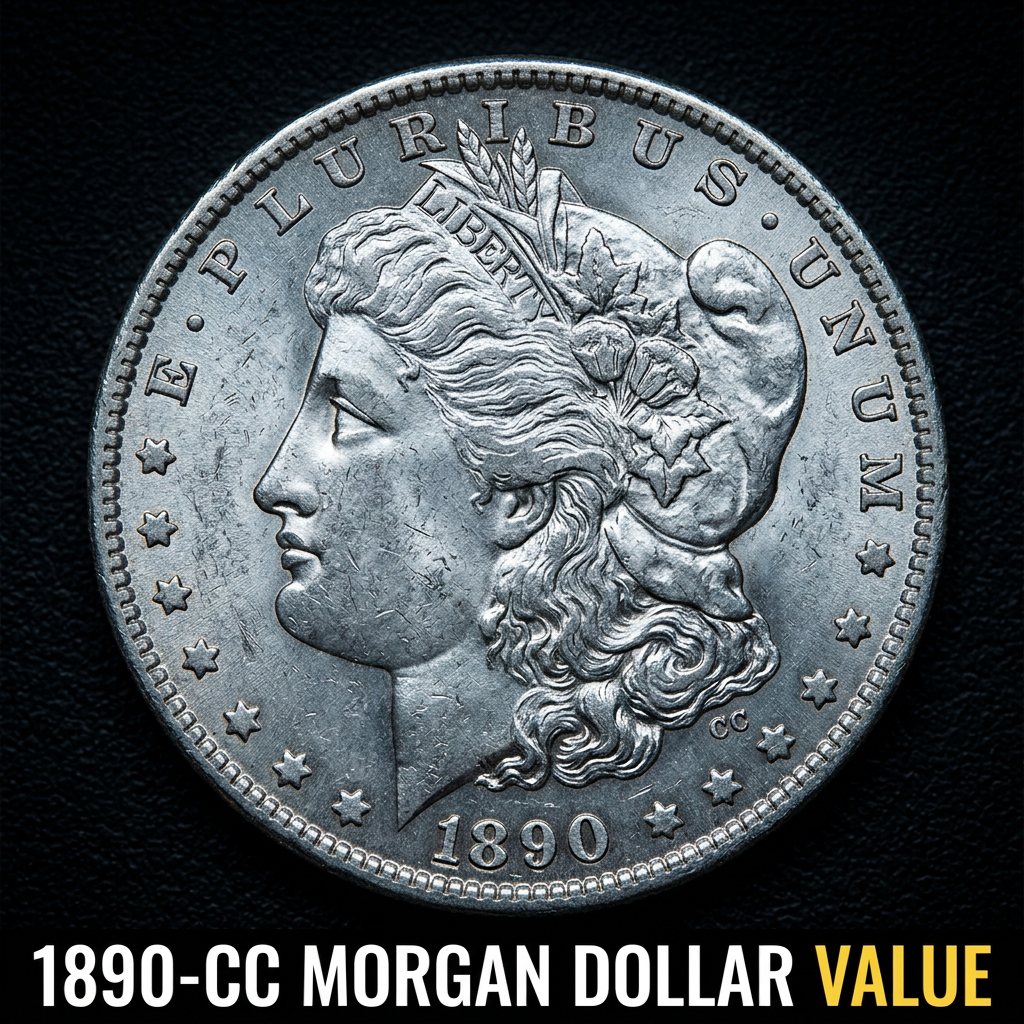
The 1890-CC Morgan Dollar is worth anywhere from $600 in worn condition to over $5,000 in high-grade mint state. Finding this specific coin in a collection is an exciting discovery for any average American because the “CC” mint mark represents a piece of Wild West history that carries a significant premium today.
Historical Context of the Carson City 1890 Silver Dollar
The 1890-CC Morgan Dollar is more than just a piece of pocket change; it is a relic from the famous Carson City Mint in Nevada. During the late 19th century, the United States was experiencing a massive silver boom, and the Carson City Mint was established right in the heart of the action to process silver from the Comstock Lode. Coins struck here are highly coveted by collectors because of their low mintage numbers and the romantic history of the American frontier. If you find a silver dollar with the “CC” mark on the back, you are holding a piece of history that survived a time of cowboys and silver barons.
Using the CoinKnow app can help you identify if your coin has that specific “CC” mark and provide an instant estimate of its rarity. In 1890, the mint produced only 2.3 million of these dollars, which might sound like a lot, but it is much lower than the tens of millions produced in Philadelphia that same year. Because many of these coins were melted down or heavily circulated in the rugged Western states, finding one in decent shape is a win for any casual collector. To help you narrow down the specifics of your find, you can consult a top coin identifier app to ensure you aren’t overlooking any unique features.
Your Old Coin Could Be Valuable!
Identify It & Know Its Real Value — Free Download
Your Old Coin Could Be Valuable!
Identify It & Know Its Real Value — Free Download
How to Identify Grade and Condition at Home
If you want to know the true 1890-CC Morgan Dollar value, the first thing you must look at is the condition, or “grade.” Professional collectors use a scale from 1 to 70, but for an everyday person, it’s easier to look at the wear on Lady Liberty’s hair and the eagle’s breast feathers. If the lines in the hair above her ear are completely smooth, the coin is considered “Good” or “Fine.” If you can see fine details in the feathers and the coin has a shiny, original luster, it might be in “Mint State.”
Your Old Coin Could Be Valuable!
Identify It & Know Its Real Value — Free Download
It is important to check the current 1890 CC silver dollar market trends before deciding to sell. Even a coin that looks a bit dirty can be worth hundreds of dollars, so never attempt to clean it with polish or soap. Cleaning a coin actually destroys its value by scratching the surface and removing the “patina” that collectors love. Many people use CoinKnow to photograph their coins and get a better sense of how the condition affects the price before taking it to a local dealer.
Price Breakdown and Value Chart
The value of your 1890-CC Morgan Dollar fluctuates based on current silver prices and collector demand. While the silver content itself is worth about $20 to $25, the numismatic (collector) value is what drives the price into the hundreds or thousands. A coin in “Good” condition usually fetches a healthy sum because the “CC” mint mark is so rare. As you move up into “Uncirculated” or “Mint State” grades, the price takes a massive jump.
Your Old Coin Could Be Valuable!
Identify It & Know Its Real Value — Free Download
For those looking for the most recent sales data, you can view the 1890-CC Morgan Dollar uncirculated auction prices to see what elite specimens are selling for at modern coin shows. Keep in mind that professional grading by services like PCGS or NGC is often required to reach the highest price points listed in charts.
| Condition / Grade | Estimated Value |
|---|---|
| Very Good (VG-8) | $600 – $650 |
| Fine (F-12) | $725 – $775 |
| Extremely Fine (EF-40) | $950 – $1,100 |
| About Uncirculated (AU-50) | $1,500 – $1,800 |
| Mint State (MS-60) | $3,200 – $3,800 |
| Choice Mint State (MS-63+) | $5,200+ |
Spotting Counterfeits and the Tail Bar Variety
Because the 1890-CC is so valuable, there are many fakes in the market. Some are modern replicas from overseas, while others are authentic 1890 dollars where someone has “glued” on a fake “CC” mint mark. To be sure your coin is real, look at the mint mark under a magnifying glass to see if it looks like part of the coin or an addition. Real “CC” marks are crisp and deeply struck.
Your Old Coin Could Be Valuable!
Identify It & Know Its Real Value — Free Download
There is also a famous variety known as the “Tail Bar” variety, though it is more common in 1890-CC’s cousin, the 1890-O. For the 1890-CC, you primarily want to check for the double-die features on the obverse or reverse. Using the CoinKnow app can help you compare your coin against high-resolution images of authentic pieces. This ensures that when you talk to a buyer, you know exactly what you have in your hand.
FAQ
Q: Where is the mint mark on an 1890-CC Morgan Dollar?
A: You can find the mint mark on the reverse (back) of the coin. Look just above the letters “DO” in the word “DOLLAR.” If you see two small “C” letters stacked or side-by-side, it was minted in Carson City. If there is no letter, it was minted in Philadelphia.
Q: Why is the 1890-CC worth so much more than the 1890-P?
A: It comes down to supply and demand. The Philadelphia (P) mint produced over 16 million coins in 1890, making them very common. The Carson City mint only produced 2.3 million. Because the “CC” mint has a legendary reputation among collectors, the demand is much higher, driving the price up significantly.
Your Old Coin Could Be Valuable!
Identify It & Know Its Real Value — Free Download
Q: Should I clean my 1890 silver dollar to make it look newer?
A: No! This is the most important rule in coin collecting. Cleaning a vintage silver dollar, even with a soft cloth, creates microscopic scratches that devalue the coin by up to 50% or more. Collectors prefer the natural “aged” look, even if it looks dark or toned.
Q: How can I sell my 1890-CC Morgan Dollar for the best price?
A: First, get it appraised or use an app like CoinKnow to get a baseline value. If the coin is in exceptionally good condition, you should consider having it professionally graded by PCGS or NGC. Once graded, you can sell it through reputable auction houses or specialized coin dealers to ensure you get the full market value.